
· Ortiz Landscaping & Tree Services
Even well-kept lawns come under attack from weeds. Knowing which weed you are looking at helps, because many weeds point to a condition in the lawn that let them in.
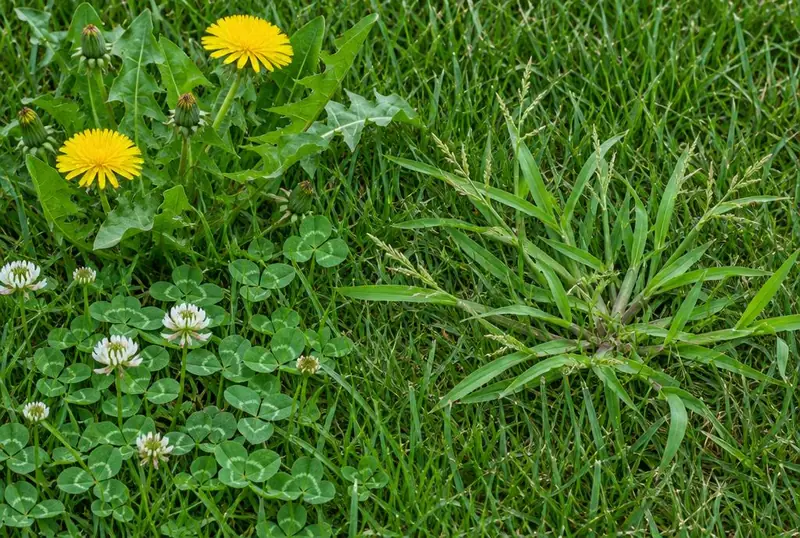
Crabgrass
A summer annual that sprouts from seed once the soil warms in spring, then spreads in low, wide clumps and dies with the first hard frost, leaving bare spots. Crabgrass thrives where turf is thin and mowed short, because sunlight reaches the soil. Mowing taller and thickening the lawn are the long-term answers.
Dandelions
Perennials with a long taproot. Pulling the top without the root lets the plant regrow. Their puffball seed heads spread them widely, so scattered dandelions in a thin lawn can multiply quickly.
Clover
Clover can pull nitrogen from the air, so it often shows up where soil nitrogen is low. Some homeowners welcome it; others want a uniform lawn. Either way, its presence is a hint about fertility.
Broadleaf plantain
Flat rosettes of wide, ribbed leaves that tolerate trampling. Plantain often signals compacted soil, such as along paths and play areas.
Nutsedge
Looks like grass but grows faster and is a lighter, yellow-green. Roll a stem between your fingers: sedges have a triangular stem. Nutsedge favors wet spots, so it can point to drainage problems.
The best defence
A dense, healthy lawn leaves little room for weeds. Mowing at the right height, seeding thin areas and improving soil all reduce weed pressure over time, alongside direct weed control.
Our weed control helps you fight back in lawns and beds, and our lawn maintenance program works on the conditions behind the weeds. Call (609) 454-7355 or request a free quote.