
· Seasonal · Ortiz Landscaping & Tree Services
Many central New Jersey neighborhoods are full of mature oaks and maples, which means a lot of leaves from October into December. Fall leaves are a natural resource, but left as a thick blanket on the lawn they can do real damage.
Why leaves hurt a lawn
Fall is when cool-season grasses recover and store energy for winter. A heavy layer of leaves blocks sunlight, traps moisture against the grass and can smother it, leaving thin or dead patches and conditions that favor snow mold by spring.
Light cover: mulch them
When leaves are scattered thinly, run the mower over them. Chopped into small pieces, they settle between grass blades and break down, returning organic matter to the soil. If you can still see plenty of grass after mowing, you are fine.
Heavy cover: remove them
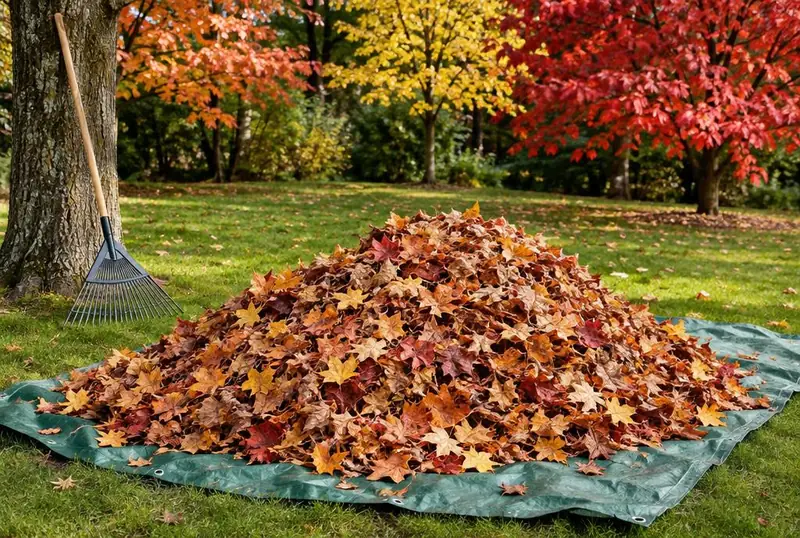
When leaves pile up faster than the mower can handle, rake, blow or vacuum them off the lawn. Clearing every week or two during peak leaf drop is far easier, and better for the grass, than one big cleanup at the end of the season.
Put them to work
- In beds: shredded leaves make a good mulch layer around perennials and shrubs.
- In compost: mix shredded leaves with green material for rich compost by next year.
- Curbside: many New Jersey towns run seasonal leaf collection; check your municipality's schedule and rules for piles or bags.
Do not forget the gutters and drains
Leaves clog gutters, downspouts and storm drains, which can send water where it should not go during fall storms. Clear them after most leaves have fallen.
The final cleanup
Aim to have the lawn clear of leaves before the first lasting snow. Pair the final cleanup with the last mow of the year, cut slightly shorter, for a lawn that greens up faster in spring.
Ortiz Landscaping's lawn maintenance includes seasonal cleanups. Call (609) 454-7355 or request a free quote.