
· Ortiz Landscaping & Tree Services
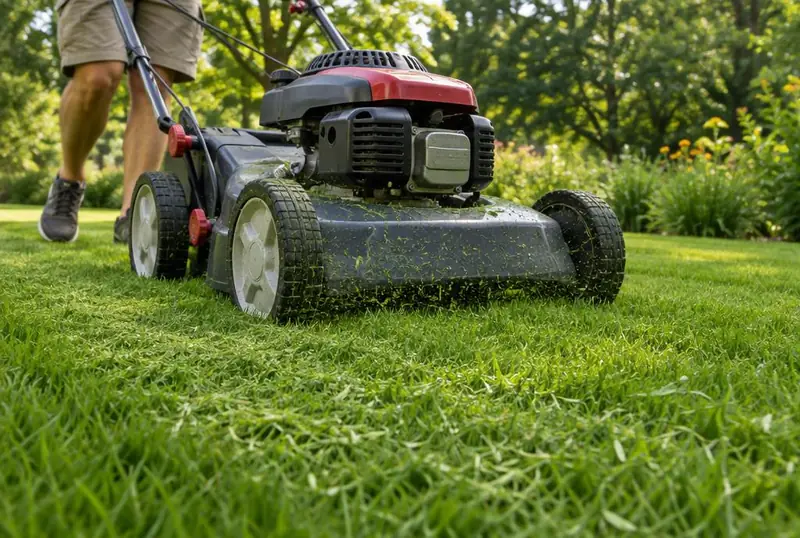
After a mow you have a choice: bag the clippings or let them fall. On a lawn that is mowed regularly, leaving them is usually the better option.
Clippings are mostly water
Fresh grass clippings are high in moisture and break down quickly, often within days. As they decompose they return nitrogen and other nutrients to the soil, which can reduce how much fertilizer the lawn needs over a season. They also act as a very thin layer of mulch between blades.
The thatch myth
Many people bag clippings because they worry about thatch. Thatch is a layer of stems, roots and runners that builds up between the soil and the green blades. Short, fresh clippings are not the main cause; they break down too fast. Thatch problems tend to come from overly vigorous growth, heavy fertilizing and compacted soil that slows the organisms that break organic matter down.
When bagging makes sense
- The grass got too long and the mower leaves heavy clumps or rows. Clumps can smother the grass beneath them.
- The lawn has an active disease problem and you want to avoid spreading it.
- Clippings are full of weed seed heads you do not want scattered.
- Clippings are blowing onto patios, walks or the street, where they can wash into storm drains.
Making it work
Grasscycling works best when you mow often enough to follow the one-third rule and keep the blade sharp, so clippings are fine and scatter evenly. Whatever lands on hard surfaces should be blown back onto the lawn rather than left to wash away.
On every grass cutting and trimming visit our crew trims, edges and cleans clippings off walks and driveways. For a full-season plan, look at our lawn maintenance, or call (609) 454-7355.