
· Gardening · Ortiz Landscaping & Tree Services
A well-prepared bed in April means fewer weeds, healthier plants and a cleaner look all season. In central New Jersey, most bed work can start once the soil has dried out enough that it crumbles instead of clumping when you squeeze it.
1. Clean out winter debris
Rake out leaves, fallen twigs and last year's dead annuals. Cut back perennials and ornamental grasses that were left standing over winter before new growth gets tall, so you do not cut the new shoots.
2. Cut a fresh edge
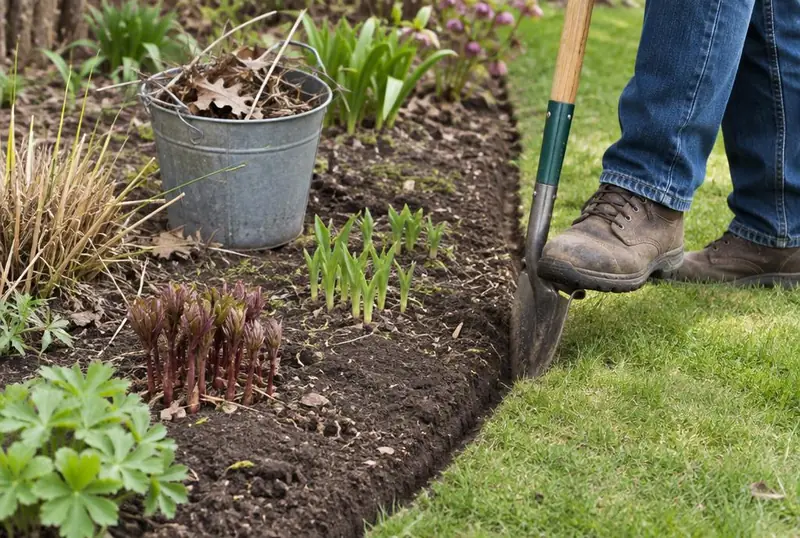
A crisp edge between lawn and bed is the single biggest visual upgrade in a spring cleanup. Use a flat edging spade to cut a clean line a few inches deep, and pull back the turf that has crept into the bed.
3. Weed early
Weeds are easiest to pull while small and while the soil is moist. Get the roots, especially on dandelions and other taprooted weeds, or they will be back in a few weeks.
4. Feed the soil
Work a thin layer of compost into the top few inches of soil in annual and perennial beds. Avoid working soil when it is wet, which compacts it. Around established shrubs, a light top layer of compost under the mulch is enough.
5. Divide and plant
Early spring is a good time to divide crowded summer- and fall-blooming perennials and to fill gaps. Wait until after the last frost, usually late April into early May in central New Jersey, before planting tender annuals and vegetables.
6. Mulch last
Once beds are cleaned, edged, weeded and planted, finish with two to three inches of mulch. Rake old mulch first so you are not simply piling more on, and keep mulch pulled back from stems and trunks. Our guide on how deep mulch should be has the details.
Keep up with it
A quick weeding pass every week or two through May and June stops weeds before they set seed and saves a lot of work later in summer.
Ortiz Landscaping handles spring cleanups, weeding, mulching and planting. Call (609) 454-7355 or request a free quote.