
· Ortiz Landscaping & Tree Services
Trees add shade, privacy and value to a property, but a tree in poor condition can become a hazard to your home, your car or the people who walk beneath it. These are the signs worth acting on.
Dead or hanging branches
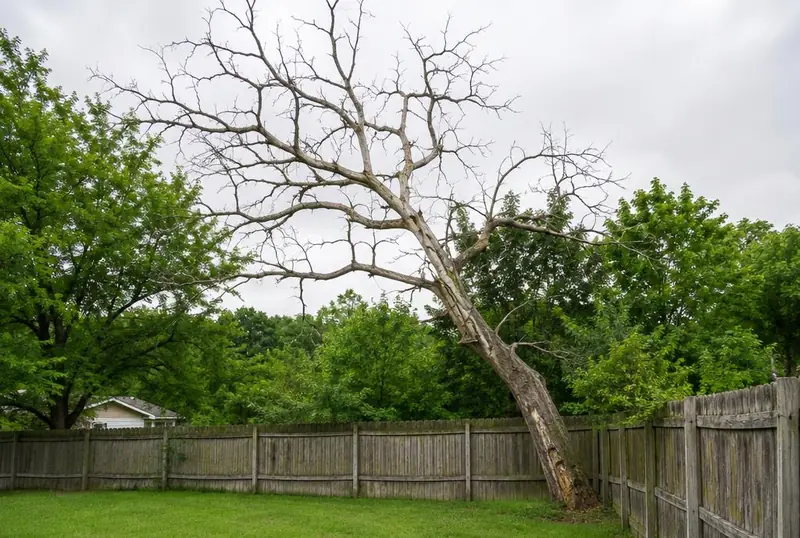
Branches with no leaves during the growing season, bark falling away, or limbs that are broken and caught in the canopy (sometimes called "hangers") can drop without warning, especially in wind or under snow. Removing dead wood is one of the most basic reasons for tree trimming.
Cracks, splits and weak unions
Look at where large limbs meet the trunk and where the trunk splits into two or more stems. Deep cracks, or a narrow V-shaped fork with bark squeezed between the stems, can be weak points that fail under load.
Leaning that changes
Many trees grow with a lean and stay stable for decades. A lean that appears suddenly, or soil that is heaving or cracked on one side of the base, is different and should be looked at promptly.
Fungus and decay
Mushrooms or shelf-like growths on the trunk or around the base can indicate decay inside. Hollow sounds, soft wood and cavities are other clues.
Branches in the wrong place
Not every job is about a sick tree. Limbs that rub the roof, hang over the driveway, block a window or crowd a neighbor's property are good candidates for trimming. Thinning a dense canopy can also let more light and air reach the lawn below, which helps grass that struggles in shade.
What not to do
Avoid "topping," cutting the main stems back to stubs. It produces weak regrowth and often shortens the tree's life. And leave large limbs, and anything near power lines, to professionals.
Our tree trimming and removal work removes diseased or damaged branches, directs growth and manages density for light and air. If you are unsure about a tree, call (609) 454-7355 or request a free quote for a free consultation.